
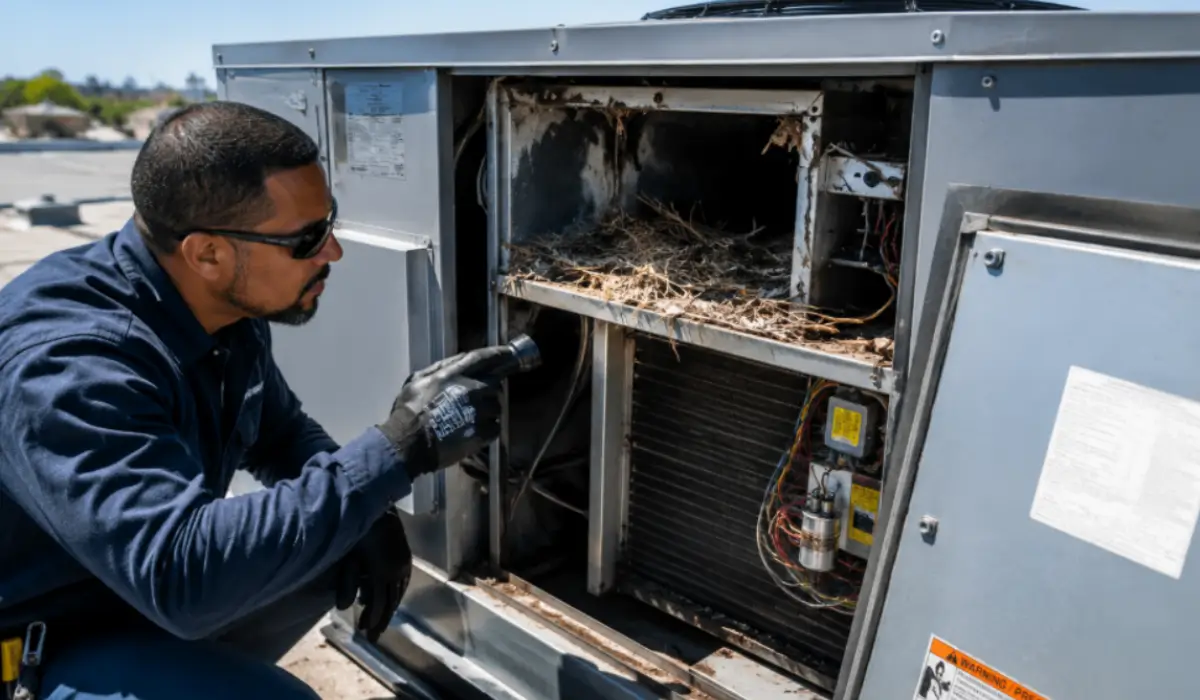
Wildlife Damage to HVAC Units: What Property Managers Need to Know
A single nest in your rooftop HVAC can short-circuit summer cooling, cost thousands in repairs, and create tenant safety concerns. Wildlife Damage inside rooftop HVAC systems often leads to wiring failures, blocked airflow, and emergency shutdowns for commercial properties and HOAs during spring nesting season.
We handle these issues across commercial buildings and HOA properties every year. Most system failures are preventable when caught early by Professional Wildlife Removal.
Property managers searching for wildlife removal services near me often need more than removal. They need a company that can inspect, remove, repair, and prevent the problem from returning.
Why Spring is Prime Time for Wildlife Inside HVAC Systems
Spring creates ideal conditions for animals looking for warmth and shelter inside rooftop HVAC units. Warm coils, quiet rooftops, and small access gaps give birds, raccoons, and squirrels protected nesting areas during seasonal transitions.
Why Rooftop Units Become Easy Targets
- Residual heat from coils
- Protection from weather and predators
- Limited rooftop activity
- Open gaps near wiring and duct lines
We regularly find nests forming before cooling systems move into full operation. Rooftop units often stay unchecked during spring, giving wildlife time to settle in before heavy summer use begins.
Early Warning Signs Around HVAC Units
Small warning signs usually appear before serious damage happens. Property managers should watch for unusual sounds near rooftop systems, debris around vents, weak airflow, delayed cooling, or repeated tenant complaints from the same area.
This is where animal removal service becomes part of routine property protection instead of emergency response. Early rooftop evaluations help prevent larger HVAC failures once temperatures rise.
A simple rooftop hotspot diagram can also help maintenance staff identify areas where animals commonly enter around coils, vents, and exposed wiring. Commercial properties can also review Illinois wildlife control regulations to better understand seasonal wildlife behavior, licensing requirements, and legal handling procedures.
How Rooftop Bird Nests Escalate Into HVAC Failure
Commercial rooftop HVAC problems often begin quietly. Small nesting activity can gradually restrict airflow, strain equipment, and trigger costly emergency shutdowns.
Bird Nest Forms
Nesting begins quietly around rooftop HVAC equipment during seasonal activity.
Airflow Blocked
Debris begins restricting airflow around rooftop fan housing and ventilation areas.
Motor Overheats
Reduced ventilation may cause overheating during high-demand cooling periods.
Tenant Complaints
Cooling performance drops and building occupants begin reporting temperature issues.
Emergency Shutdown
HVAC equipment may require shutdown to prevent additional damage.
Repair Costs
Cleanup, motor replacement, and rooftop service access increase total costs quickly.
Case Snapshot: Bird Nest Causes 2-Day Cooling Outage in Condo Complex
A condo complex lost cooling for two full days after a rooftop HVAC unit failed during early summer demand. A bird nest inside the fan housing blocked airflow, causing the motor to overheat once the system increased output.
What Followed
Emergency HVAC service was needed after tenants reported rising indoor temperatures throughout the building. Cleanup and repairs required temporary shutdown while the damaged fan housing and blocked airflow system were reviewed.
Real Impact
Total repair and service costs can easily reach $800 to $2,500+ depending on motor damage, cleanup, and roof access.
Risk Matrix: What’s at Stake If You Don’t Inspect HVAC Zones
Wildlife inside HVAC systems creates hidden risks that become more expensive over time. Small problems often stay unnoticed until cooling performance drops or electrical components fail.
What This Means For Your Property
Early problems usually cost less but stay hidden until HVAC systems begin working harder during warmer weather. Delayed detection increases repair expenses and creates a higher risk of shutdowns caused by electrical or airflow damage.
This is where critter control and seasonal planning make a measurable difference. A reliable animal control company should review the property, remove animals safely, repair damaged areas, and prevent future access points.
Most commercial properties discover the issue after airflow problems or tenant complaints begin. A structured seasonal check helps identify vulnerabilities before emergency service becomes necessary.
Professional Risk Matrix
Compare common wildlife-related HVAC risks by damage type, detection timing, and potential repair costs.
| Wildlife | Damage Type | Detection Time | Estimated Cost |
|---|---|---|---|
|
🐭
Rodents
|
Chewed wiring | Often noticed after system issues, odors, or visible droppings. | $300–$1,500+ |
|
🦝
Raccoons
|
Duct damage / insulation disturbance | Usually detected after noises, torn materials, or airflow changes. | $750–$3,000+ |
|
🦨
Skunks
|
Odor contamination | Often detected quickly once odor enters vents or crawl spaces. | $500–$2,500+ |
|
🐿️
Squirrels
|
Nesting near equipment | Usually found after noises, debris, or electrical concerns. | $250–$1,200+ |
What This Means For Your Property
Early problems usually cost less but stay hidden until HVAC systems begin working harder during warmer weather. Delayed detection increases repair expenses and creates a higher risk of shutdowns caused by electrical or airflow damage.
This is where critter control and seasonal planning make a measurable difference. A reliable animal control company should review the property, remove animals safely, repair damaged areas, and prevent future access points.
Most commercial properties discover the issue after airflow problems or tenant complaints begin. A structured seasonal check helps identify vulnerabilities before emergency service becomes necessary.
Our wildlife removal services explain the full process from review through prevention.
Our Seasonal Wildlife Inspection Program for Property Managers
A structured seasonal program helps prevent HVAC failures before cooling demand increases. We inspect, remove, repair, and prevent recurring wildlife issues so commercial properties are not dealing with repeat problems later in the season.
What the inspection includes
Rooftop evaluations include checks for nesting activity, exposed access points, debris buildup, and wiring damage. Safe removal, cleanup guidance, repair recommendations, and prevention sealing are also included during the process.
This layered approach helps reduce repeat wildlife activity and protects HVAC systems during heavy seasonal use.
Why This Matters For Hoas And Commercial Properties
Inspection reports and photo documentation can support HOA maintenance records, insurance documentation, and contractor communication. Clear records also help building managers respond faster when liability concerns or repair questions appear.
Professional Wildlife Removal supports multiple buildings across our local service areas, helping commercial properties keep seasonal reviews organized across several locations.
Traditional pest control company services may solve a short-term issue, but long-term prevention requires removal, repair, sealing, and follow-up working together. This process helps reduce repeat wildlife entry around rooftop HVAC systems.
How Ongoing Protection Works
Quarterly service visits help identify seasonal wildlife activity before HVAC systems face peak summer strain. Emergency access procedures also help commercial properties respond quickly when rooftop HVAC failures happen outside normal maintenance schedules.
This is where many self-managed approaches fall short. Wildlife may be removed temporarily, but open entry points and hidden nesting areas often remain untreated without a complete prevention plan.
Property managers can also review our wildlife control questions for common concerns about response times, prevention steps, and seasonal service planning.
You can also review details about Zach Posey and how Professional Wildlife Removal handles commercial wildlife issues across HOA and multi-unit properties.
Protect Your Property Before Cooling Season Hits: Book a Spring HVAC Wildlife Inspection
Waiting until HVAC systems fail creates higher repair costs and avoidable tenant disruption. A seasonal review helps identify hidden wildlife activity before cooling systems face heavy summer demand.
Property managers often face pressure from tenants once cooling systems stop working. Preventive service reduces emergency calls, scheduling problems, and unexpected repair expenses during warmer months.
For HVAC maintenance guidance, review the ENERGY STAR maintenance checklist.
Seasonal nuisance wildlife removal works best when paired with documentation, repair notes, and long-term prevention planning. A rooftop wildlife entry diagram can also help maintenance staff identify common nesting zones before damage spreads through the system.
Commercial properties can wait for a system failure and deal with emergency repairs, or catch the issue early before wildlife damage spreads through the HVAC system.
A seasonal review helps identify rooftop access points, airflow risks, and hidden nesting activity before cooling problems begin.