

Wildlife Threats for HOAs this Summer and What Boards Need to Address
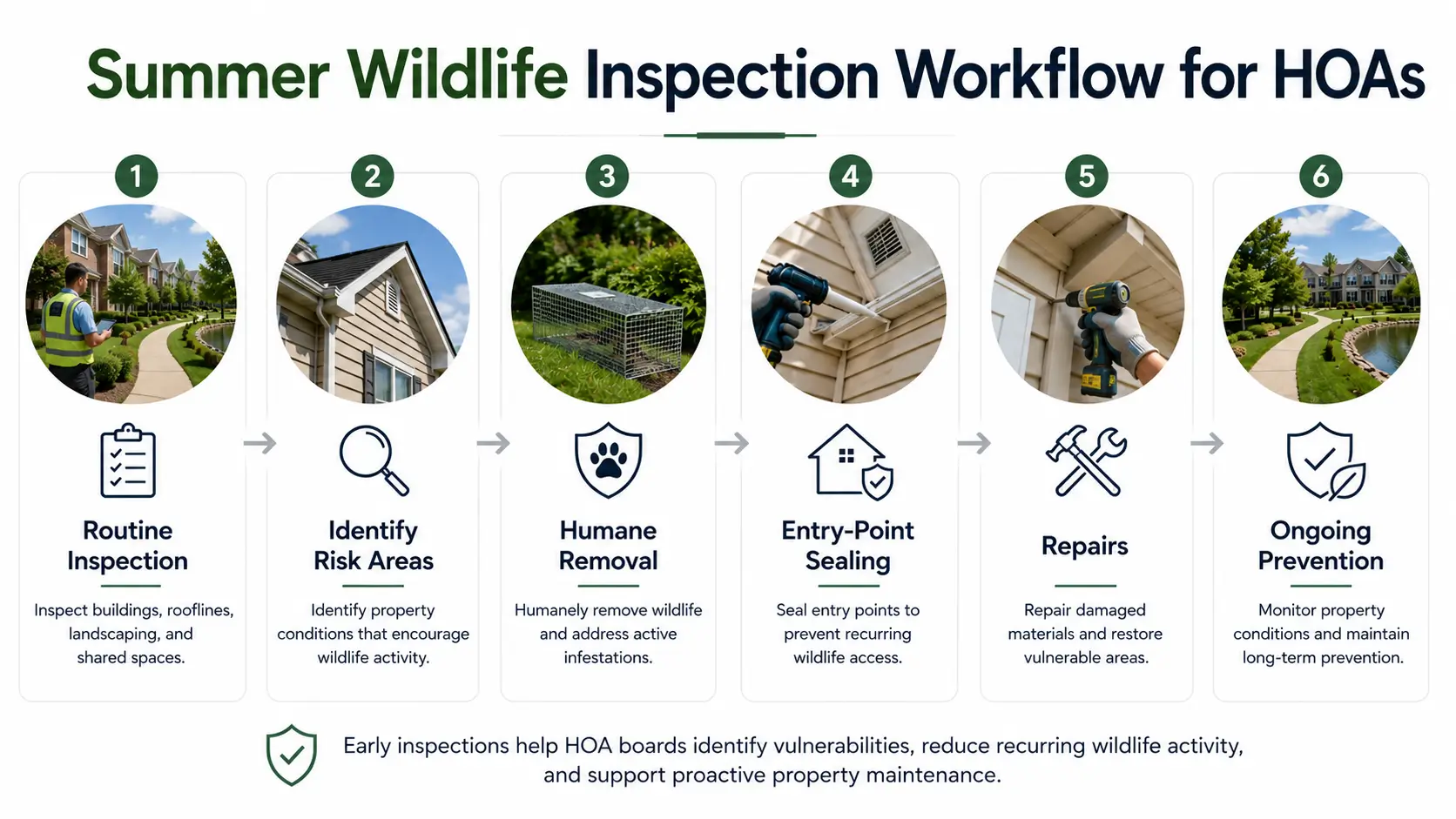
Summer increases wildlife activity across HOA communities, raising the risk of property damage, resident complaints, and avoidable maintenance costs. Summer wildlife threats often escalate quickly when early warning signs are missed, especially in shared spaces where issues can spread between buildings. Professional Wildlife Removal helps HOA boards prevent this through proactive inspections, humane removal, exclusion, repairs, and long-term prevention.
Because HOAs include multiple buildings, amenities, and connected outdoor areas, wildlife can move freely between structures and exploit small maintenance gaps before damage becomes visible. A seasonal prevention plan helps boards reduce disruptions, protect shared assets, and address risks early.
Professional wildlife removal services are most effective when inspections happen before animals establish shelter, allowing vulnerabilities to be corrected quickly and cost-effectively.
Why Summer Creates More Wildlife Challenges
Summer naturally increases wildlife activity across HOA communities due to a combination of environmental and property conditions. Understanding these drivers helps boards shift from reactive repairs to proactive prevention.
Seasonal Conditions Increase Wildlife Activity
Warm weather expands access to essential resources, making HOA properties more attractive to wildlife. Common contributors include:
- Abundant food and water sources
- Mature trees and dense landscaping
- Retention ponds and drainage areas
- Waste collection and storage zones
- Interconnected buildings that offer shelter pathways
These features create concentrated environments where multiple species can thrive within a small geographic area.
Property Vulnerabilities Create Entry Points
Wildlife rarely appears without a reason. In most summer inspections, activity is linked to existing structural or maintenance issues, such as:
- Damaged soffits or fascia
- Loose or unsealed roof vents
- Deteriorating siding or trim
- Overgrown vegetation near structures
- Gaps around utility penetrations
Individually, these issues may seem minor, but together they form reliable access points when routine maintenance is delayed.
A Predictable Progression of Risk
Wildlife issues typically escalate in a consistent pattern:
- Exterior vulnerabilities create access opportunities
- Wildlife begins repeated exploration or entry
- Nesting or sheltering behavior develops
- Delayed repairs lead to damage, contamination, or resident complaints
This progression highlights why early intervention is more effective than responding after visible damage occurs.
For additional context on seasonal behavior and habitat patterns, the Illinois wildlife management information provides guidance on native species activity throughout the summer months, helping property managers better anticipate risk conditions.
Summer Wildlife Threats Often Develop Before Damage Is Visible
Visible damage is usually one of the last indicators of wildlife activity rather than the first. Animals often investigate rooflines, attics, crawl spaces, ponds, and landscaped areas long before residents notice noises, odors, or exterior damage. That early activity creates an opportunity for HOA boards to identify developing risks before repair costs increase.
Summer Wildlife Threats Can Often Be Prevented Through Early Detection
Many wildlife issues begin with small maintenance deficiencies instead of sudden increases in animal populations. Routine inspections help identify favorable conditions while corrective action remains relatively straightforward.
During seasonal property assessments, our team evaluates the conditions that encourage wildlife activity instead of focusing only on active animal sightings. This diagnostic approach helps HOA boards prioritize maintenance based on overall property risk rather than isolated service requests.
Early warning signs commonly include:
- Damaged soffits, fascia, or roof vents.
- Fresh digging near retention ponds or landscaped berms.
- Repeated noises from attics or shared wall spaces.
- Droppings around maintenance buildings or common structures.
- Vegetation creating direct roof access.
- Multiple resident reports involving the same location.
Although each observation may appear minor, several warning signs occurring together often indicate that wildlife has already established regular activity within the community. Early intervention helps reduce the likelihood of recurring entry, larger repair projects, and repeated resident complaints.
| Early Condition | Why It Matters |
|---|---|
| Damaged exterior vents | Can provide access into attics or wall voids. |
| Roofline gaps | Increase opportunities for repeated entry. |
| Burrowing near ponds | May indicate shoreline instability and continued wildlife activity. |
| Dense vegetation against buildings | Creates concealed travel routes and easier access. |
| Repeated complaints from one area | Often point to a developing property-wide issue rather than an isolated incident. |
Wildlife activity around rooftop equipment and exterior mechanical systems is another area that deserves routine evaluation. Wildlife damage to HVAC systems demonstrates how overlooked mechanical infrastructure can become vulnerable when seasonal inspections focus only on visible building exteriors.
Communities searching for wildlife removal services near me often focus on solving the immediate problem. Long-term success depends on understanding why wildlife selected the property, correcting favorable conditions, and implementing prevention measures that reduce future activity.
Why Bat Bugs Often Become More Noticeable in Summe
Summer is when bat colonies are at their largest, making bat bugs more likely to be noticed if they are present.
Illinois’ bat maternity season begins in late spring and continues through much of the summer. Female bats gather in protected attic spaces where young bats are born and remain until they can fly independently. The Illinois Department of Natural Resources provides additional information about living with bats in Illinois, including their seasonal behavior and the important role they play in the environment.
As the colony grows, bat bug populations may also increase because their preferred hosts remain nearby. If bats later relocate or are excluded after the appropriate seasonal window, the insects may begin moving in search of another blood meal.
It’s important to remember that not every bat colony contains bat bugs, but established colonies can create conditions where they are more likely to appear.
Because wildlife regulations protect flightless young bats during maternity season, the timing of bat exclusion is an important part of responsible nuisance wildlife removal.
If you’re unsure whether bats can legally or safely be removed, our guide to Bat Exclusion 101: Why April Is the Cutoff Before They’re Protected explains how seasonal timing affects exclusion work.
Five HOA Inspection Areas That Deserve Priority
Seasonal inspections produce the greatest value when they focus on the locations where wildlife activity is most likely to develop. Prioritizing these areas helps HOA boards make proactive maintenance decisions before isolated wildlife activity affects multiple buildings or common spaces.
Rooflines and Building Exteriors
Roof edges, soffits, fascia, vents, and utility penetrations deserve routine attention because they often become the first opportunities for wildlife entry. Weather exposure, aging materials, and deferred maintenance gradually create small openings that animals can exploit before visible damage appears inside a building.
What we often see is that a minor exterior defect becomes a recurring entry point when seasonal inspections are delayed. Repairing these vulnerabilities early helps reduce future exclusion work while protecting attics, wall cavities, and other concealed spaces.
Retention Ponds and Shorelines
Retention ponds provide critical stormwater management, but they also create favorable habitat for several wildlife species. Burrowing activity, shoreline erosion, worn animal trails, or damaged vegetation may indicate that wildlife has begun using these areas regularly.
Wildlife movement around ponds often follows predictable habitat patterns because reliable water, shoreline vegetation, and cover provide food, shelter, and travel corridors throughout the warmer months. Penn State Extension provides additional information on managing wildlife in ponds, including how habitat conditions can influence wildlife activity around residential water features.
Communities with shoreline burrowing may also experience erosion, unstable pond banks, and ongoing landscape damage. Muskrat removal for HOA retention ponds examines how this activity can affect pond stability, surrounding landscapes, and long-term maintenance planning.
Landscaped Common Areas
Trees, shrubs, ornamental plantings, and natural buffers improve community appearance while also creating shelter and concealed travel routes. Without routine trimming and maintenance, vegetation can provide direct access to roofs, crawl spaces, decks, and utility corridors.
Landscape inspections should evaluate more than appearance. Identifying vegetation that increases wildlife access helps maintenance teams reduce favorable conditions before activity becomes established. The University of Illinois Extension offers additional guidance on managing wildlife around homes and landscapes, including practical ways to reduce wildlife attractants while maintaining healthy landscapes.
Foundations, Sidewalks, and Open Green Space
Ground-level activity often develops gradually, making routine inspections especially valuable around foundations, walking paths, retaining walls, and open common areas. Fresh soil disturbance, burrows, damaged turf, or recurring digging may indicate that wildlife is using these locations for shelter or travel.
Groundhog damage in HOA landscapes highlights how burrowing activity can affect lawns, landscaped areas, and property maintenance if left unaddressed.
Resident Reports and Maintenance Trends
Resident observations frequently provide the earliest indication of developing wildlife activity. When multiple homeowners report similar noises, sightings, or recurring issues within the same area, the pattern often points to an underlying property condition instead of unrelated incidents.
Maintaining a record of complaint locations helps property managers identify recurring hotspots, prioritize inspections, and address root causes before problems spread throughout the community.
Resident Complaints Often Reveal Larger Property Issues
Wildlife complaints usually develop in predictable patterns. A scratching noise in one building, repeated sightings near a retention pond, and damaged landscaping elsewhere may all originate from the same wildlife movement throughout the property.
Evaluating complaints collectively instead of individually provides a clearer understanding of where inspections should begin. This approach also improves communication with residents by demonstrating that maintenance decisions are based on documented property conditions rather than isolated reports.
Communities comparing an animal control company should also evaluate whether the company performs inspections, exclusion, repairs, and prevention in addition to humane wildlife removal.
Why Delaying Action Can Increase Costs
Wildlife problems rarely remain confined to one location. As animals continue using the same entry points or habitat areas, repair costs often increase because damage extends beyond the original access point.
Delays may also create additional operational challenges, including repeated service requests, scheduling disruptions, resident dissatisfaction, and unexpected maintenance expenses. As wildlife activity expands, maintenance often shifts from addressing a single issue to coordinating repairs across multiple areas of the property.
Addressing favorable wildlife conditions early helps HOA boards make planned improvements instead of reacting to emergencies.
Building a Seasonal Wildlife Management Plan
An effective seasonal plan focuses on prevention instead of repeated response. Scheduling inspections before peak wildlife activity allows maintenance teams to identify developing risks, prioritize repairs, and coordinate corrective work more efficiently.
A practical seasonal management plan should include:
- Routine inspections of buildings and common areas.
- Prompt repair of exterior vulnerabilities.
- Landscape maintenance that limits wildlife access.
- Monitoring of retention ponds and shoreline conditions.
- Documentation of recurring resident reports.
- Professional evaluation when wildlife activity is confirmed.
Following a structured process improves maintenance planning while reducing recurring wildlife issues over time.
Choosing a Long-Term Wildlife Management Partner
Removing wildlife is only one part of protecting an HOA community. Long-term results depend on identifying how animals entered the property, correcting structural vulnerabilities, repairing damage, and reducing conditions that encourage future activity.
HOA boards evaluating a critter removal service should look beyond animal removal alone and consider whether the company also provides inspections, humane removal, exclusion, repairs, and long-term prevention.
Our residential wildlife removal services combine inspections, humane removal, exclusion, repairs, and prevention to help HOA communities address both immediate wildlife concerns and the conditions that allow recurring activity.
Frequently Asked Questions
About Summer Wildlife Management for HOAs
Should HOA boards wait until wildlife causes visible damage before taking action?
No. Visible damage usually indicates that wildlife has already been active for some time. Scheduling inspections when early warning signs appear allows HOA boards to evaluate the situation before it affects multiple buildings, common areas, or maintenance budgets.
Can wildlife return after removal if no repairs are completed?
Yes. Humane removal addresses the immediate wildlife activity, but animals may return if entry points remain open or the property continues to provide food, water, or shelter. Long-term prevention depends on combining removal with exclusion, repairs, and ongoing property maintenance.
How should HOA boards prioritize multiple wildlife reports from residents?
Instead of treating each report as a separate incident, compare complaint locations, dates, and recurring patterns. Multiple reports from nearby buildings or common areas often indicate a broader property condition that warrants a comprehensive inspection rather than repeated spot responses.
What should HOA boards look for when selecting a wildlife removal company?
Companies specializing in nuisance animal removal should also provide inspections, exclusion, repairs, and prevention so recurring wildlife problems are addressed instead of only the immediate animal activity.
Protecting HOA Communities Starts With Early Planning
Summer wildlife threats become more manageable when HOA boards focus on prevention instead of reaction. Routine inspections, timely maintenance, and prompt corrective action help reduce property damage, improve resident satisfaction, and support more predictable maintenance budgets.
When seasonal wildlife activity requires professional attention, Professional Wildlife Removal provides inspections, humane removal, exclusion, repairs, and prevention tailored to the needs of shared residential communities.
Seasonal maintenance is the ideal time to address wildlife risks before they become larger repairs. Schedule a community wildlife inspection to help your HOA identify vulnerabilities early and make informed maintenance decisions with confidence.