

Muskrat Removal Service for Retention Ponds: A Growing Problem for HOAs
Small signs of shoreline damage can quickly become expensive repairs if muskrat activity goes unnoticed. A muskrat removal service helps HOA communities identify active burrows early, reducing erosion and protecting retention pond infrastructure. If your retention pond has sinking soil, shoreline holes, damaged vegetation, or signs of erosion, muskrats may already be tunneling beneath the surface.
Professional Wildlife Removal helps HOA boards and property managers throughout Illinois identify muskrat activity before underground damage becomes more extensive. Summer inspections often reveal hidden burrow systems, allowing communities to make informed maintenance decisions, reduce long-term repair costs, and better protect shared infrastructure from future shoreline damage.
What Is a Muskrat Removal Service?
A muskrat removal service identifies active muskrat burrows, evaluates shoreline damage, removes muskrats using appropriate methods, and recommends long-term prevention strategies.
For HOA-managed retention ponds, early inspections can help reduce erosion, protect community infrastructure, and prevent expensive restoration projects before underground damage becomes more severe.
What Muskrats Do to Pond Structures Over Time
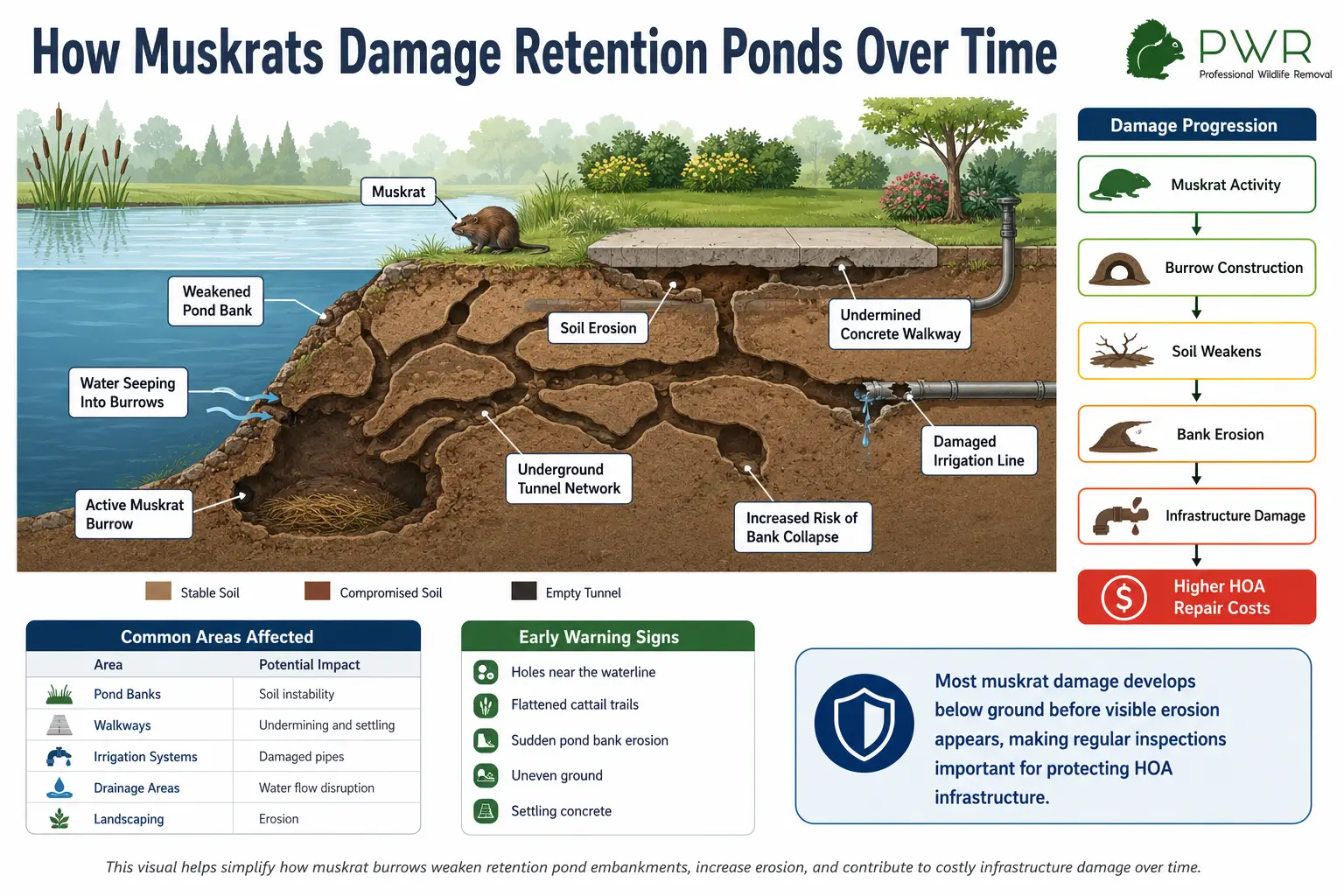
Muskrats damage more than the shoreline. As they dig burrows into pond banks, they weaken the soil that supports nearby landscaping, walkways, and underground utilities. Much of this damage develops out of sight before surface problems become noticeable.
Stormwater ponds provide the water, vegetation, and shelter muskrats prefer. As tunneling continues, embankments lose stability. Rainfall and changing water levels can then speed up erosion and increase the risk of larger structural problems.
During inspections, we often find active burrow systems that have been developing for months. By the time surface changes appear, the damage below ground is usually more extensive than expected.
| Pond Feature | Common Muskrat Damage | Potential Community Impact |
|---|---|---|
| 01 Shoreline banks | → Burrows, loose soil, and hidden tunnel openings | ✓ Accelerates erosion and increases the risk of shoreline collapse |
| 02 Concrete walkways | → Soil removal beneath pavement and surrounding edges | ✓ Can cause settling, cracks, uneven surfaces, and trip hazards |
| 03 Irrigation systems | → Burrow interference near underground pipes and supply lines | ✓ May lead to leaks, service disruption, excavation, and line replacement |
| 04 Drainage structures | → Soil displacement around inlets, outlets, and drainage channels | ✓ Can restrict water flow and reduce stormwater system performance |
| 05 Pond embankments | → Deep tunnel networks that weaken compacted soil | ✓ May compromise long-term embankment stability and require major repairs |
Maintenance teams may first notice uneven ground, cracked pavement, or concrete walkways beginning to settle near the water. These warning signs often indicate that the soil beneath the surface has already been weakened by tunneling.
Burrows can also extend beneath irrigation lines, causing leaks, broken pipes, and more difficult repairs. Properties with extensive landscaping often face additional maintenance costs when irrigation systems are affected.
The Illinois Department of Natural Resources provides guidance on muskrat habitat and shoreline damage. HOA boards and property managers can review information from the Illinois Department of Natural Resources to better understand local wildlife activity.
Across many residential developments, shoreline erosion is only part of the problem. Burrow systems may reach deeper into the embankment, increasing the amount of restoration work needed over time.
Our team regularly evaluates retention ponds throughout northern Illinois. Early inspections help identify developing problems before they lead to major shoreline failures, damaged infrastructure, or expensive repairs.
The Warning Signs Usually Appear First
Most HOA communities notice the effects of muskrat activity before anyone actually sees the animal. The pond itself often provides the earliest clues that underground activity has begun.
Maintenance teams and property managers who recognize these signs can identify problems earlier. Based on actual scenarios, identifying these conditions quickly often limits additional erosion and helps communities plan maintenance projects more effectively.
Changes Near the Waterline
Small holes along the shoreline frequently indicate active burrows. These openings may appear harmless at first, but they often connect to larger tunnel systems hidden beneath the pond bank.
Flattened trails through cattails, shoreline grass, or vegetation can suggest repeated animal movement. Muskrats usually follow the same paths between feeding areas and their dens, making these trails easier to identify during summer inspections.
HOA maintenance teams searching online for muskrat removal near me often begin looking for help only after visible erosion develops. Inspections provide an opportunity to identify these conditions before larger sections of the shoreline become affected.
Unexpected Shoreline Changes
Areas of sinking soil or sudden erosion may develop without an obvious cause. The soil above a tunnel can weaken over time, creating visible depressions or small collapses near the water.
Our team often finds that these changes appear weeks or months after the initial tunneling begins. The visible damage usually represents only a portion of the activity occurring below the surface.
The following warning signs often justify a closer inspection:
- Sudden pond bank erosion
- Holes near the waterline
- Flattened trails through cattails
- Areas of sinking soil
- Changes in water movement
Associations dealing with other burrowing wildlife may notice similar property concerns discussed in groundhog yard damage. Although the animals are different, underground activity can create similar maintenance challenges.
Small warning signs rarely remain isolated. As burrow systems expand, affected areas may spread to larger sections of the pond bank and place additional pressure on maintenance budgets.
Recognizing these signs gives HOA boards more flexibility when planning repairs, inspections, and long-term maintenance decisions.
Why HOA Communities Face Greater Risks
HOA-managed ponds play an important role in stormwater control, but they also create favorable conditions for muskrats. Larger communities often have more shoreline, more landscaping, and more infrastructure located near the water, which increases both exposure and maintenance responsibilities.
A single homeowner may only need to monitor one pond edge. HOA communities often manage several ponds, walking paths, drainage systems, irrigation equipment, and common areas that depend on stable shorelines.
| ✓ Early Response | ! Delayed Response |
|---|---|
| ✓ Smaller repairs | ! Larger restoration projects |
| ✓ Lower costs | ! Higher expenses |
| ✓ Better planning | ! Emergency work |
| ✓ Reduced erosion | ! Increased damage |
| ✓ Improved safety | ! Greater liability |
Damage Can Extend Beyond the Pond
The financial impact of muskrat activity often extends well beyond the shoreline. Repair projects may include landscaping, erosion control, shoreline stabilization, irrigation repairs, or damaged pathways. These issues can place additional pressure on reserve funds and future maintenance budgets.
Long-Term Budget Planning
Many HOA associations already budget for nuisance wildlife removal when dealing with recurring animal activity. Pond embankments require similar planning because underground burrows can affect several community systems at the same time.
Facility managers and HOA leaders can also review the Illinois Department of Natural Resources’ wildlife resources to learn more about managing native wildlife and protecting community property.
Safety and Liability Concerns
Collapsed walking paths or unstable ground can increase the risk of injuries and potential liability claims. What begins as a small area of erosion may eventually affect sidewalks, gathering spaces, or other frequently used common areas.
Stormwater Performance
During heavy rainfall, compromised embankments can reduce the effectiveness of a retention pond. Water that cannot move properly through the drainage system may contribute to localized flooding, standing water, or additional shoreline erosion.
Preventive Maintenance Protects Community Assets
Special assessments or dues increases sometimes become necessary when repairs are delayed. Addressing muskrat activity early typically provides greater budget flexibility than emergency restoration work.
Professional Wildlife Removal helps HOA boards identify muskrat activity early and implement practical management solutions before minor shoreline damage becomes a costly infrastructure repair.
Visible shoreline erosion is not always the first sign of muskrat activity. Small burrow openings, flattened vegetation, or sinking soil often appear weeks before larger sections of the pond bank begin to fail. Recognizing these early warning signs can help HOA communities address problems before repairs become more extensive and costly.
Building a Long-Term Pond Protection Plan
Removing muskrats addresses only part of the problem. Long-term protection requires understanding why the animals selected the pond and how future activity can be reduced.
A structured management plan helps communities address current damage while protecting the pond moving forward. This approach supports both immediate needs and long-term maintenance goals.
Communities seeking broader wildlife control solutions often benefit from combining inspections with prevention strategies.
Our team at Professional Wildlife Removal is led by Zach Posey, whose experience removing nuisance wildlife helps HOA boards and property managers protect retention ponds using safe, practical, and long-term solutions throughout Illinois.
Inspection and Activity Assessment
Our inspections focus on shoreline conditions, active burrows, and areas showing signs of erosion. We evaluate both visible damage and surrounding conditions that may encourage continued activity.
Visual inspections along the waterline help identify active burrows, damaged areas, and conditions that support muskrat activity. This information helps determine the extent of the problem and whether additional repairs may be needed.
- Shoreline inspection
- Waterline inspection
- Activity mapping
- Burrow identification
- Damage assessment
Inspection findings often reveal conditions that routine maintenance may overlook. Burrow systems can extend well beyond visible erosion, making a thorough evaluation especially valuable.
Many communities searching for animal trapping services are primarily concerned about removing the animals. Lasting results often depend on combining removal efforts with habitat changes and preventive measures.
Muskrat Removal Service and Prevention Measures
Humane live trapping methods focus on reducing active populations while protecting nearby property. The goal is to resolve the problem while minimizing disruption to the surrounding environment.
Pond buffer strategies may include vegetation management, shoreline monitoring, and habitat changes that discourage muskrats from returning. Ongoing inspections can also identify new activity before larger problems develop.
The broader impact of wildlife activity may also affect community infrastructure, which is discussed in property management wildlife damage.
Our team has found that communities benefit most when inspections, maintenance, and prevention strategies work together. This approach often reduces recurring wildlife activity and helps protect pond infrastructure over time.
Frequently Asked Questions
Are muskrats dangerous to residents?
Muskrats generally avoid people. The larger concern involves the damage their burrows can cause to pond banks, landscaping, and nearby structures.
In communities with walking paths or gathering areas near retention ponds, unstable soil may create safety concerns that require attention before visible damage becomes severe.
How quickly can shoreline damage appear?
The timeline varies depending on the size of the burrow system, soil conditions, and water levels. Some ponds show damage within months, while others may take longer.
Summer inspections often reveal activity that has been developing for an extended period. Earlier identification usually provides more repair options and better maintenance planning.
Can muskrats return after removal?
They can return if suitable habitat conditions remain. Prevention efforts help reduce the likelihood of future activity.
Associations that schedule periodic inspections often experience fewer recurring problems and stronger long-term protection.
Why do retention ponds attract muskrats?
These water features provide water, vegetation, and shelter that naturally attract muskrats. Dense shoreline plants and consistent water levels also create ideal conditions for burrowing.
Many property managers searching for pest control near me discover that wildlife problems often require specialized solutions because pond environments create unique challenges.
Where can HOA boards learn more?
Additional information about removal methods, inspections, and prevention is available through our muskrat removal services .
Every retention pond is different. Pond size, shoreline conditions, surrounding vegetation, and the extent of muskrat activity all influence the most effective long-term solution. A professional assessment helps determine the safest and most practical approach for each community.
Many common questions about inspections, wildlife behavior, and prevention are answered in our wildlife management FAQs .
HOA board members can also review the USDA APHIS Wildlife Services program's wildlife damage management resources to better understand how wildlife affects retention ponds, shoreline stability, and surrounding infrastructure.
Protect Your Community Budget — Request a Summer Pond Wildlife Report
Retention pond damage rarely becomes less expensive over time. Small areas of erosion can gradually affect larger portions of the shoreline and create additional maintenance concerns.
Our team understands the challenges that HOA boards and property managers face when balancing budgets, maintenance priorities, and community safety. A professional evaluation provides clear information about current conditions and potential risks.
HOA boards throughout our Illinois service areas can request a summer pond wildlife report and receive an inspection checklist that helps evaluate shoreline conditions, visible damage, and potential risk areas before problems become more severe.
Schedule a professional assessment before minor shoreline concerns develop into larger restoration projects. Our team helps HOA boards and property managers identify visible damage, hidden muskrat activity, and potential risk areas.