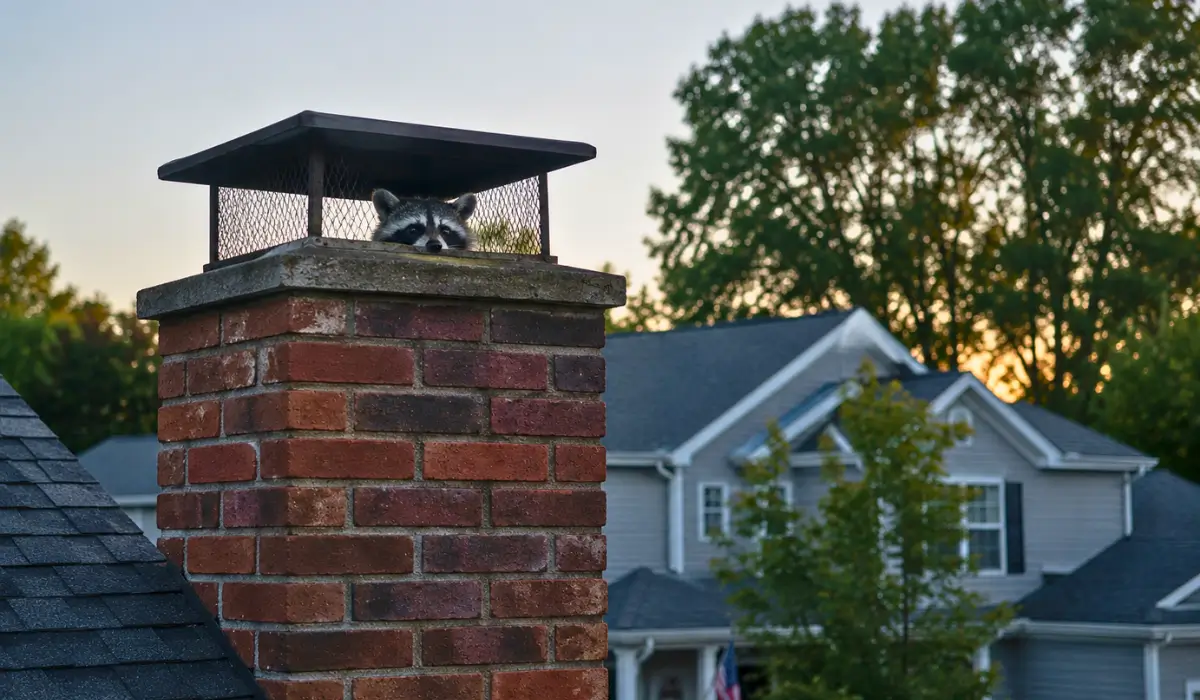
Why You’re Hearing Noises in Your Chimney This Summer
Hearing scratching, fluttering, squeaking, or thumping in your chimney during summer usually means wildlife has entered to find shelter, raise young, or escape the heat. If you’re hearing noises in your chimney, the sound, time of day, and type of activity can help identify whether a raccoon, bat, bird, squirrel, or another animal may be inside.
Chimneys provide protection from weather, predators, and changing temperatures, making them attractive nesting and resting places for wildlife throughout the warmer months.
Professional Wildlife Removal regularly helps homeowners throughout Illinois identify these problems before they become more serious. Many people expect the sounds to disappear on their own, but animal activity usually becomes more noticeable once wildlife settles inside the chimney.
Summer is one of the busiest seasons for chimney wildlife problems. Understanding what the sounds mean helps homeowners recognize warning signs early, avoid unnecessary damage, and make informed decisions before conditions become worse.
Sound Decoder: What That Chimney Noise Could Be
Different sounds often reveal important clues about the animal inside the chimney. The timing, volume, and type of movement can help narrow down the possibilities before a professional inspection takes place.
A chimney acts like a large echo chamber. Small animals can sound much larger because movement travels through the flue, fireplace, and surrounding walls. Many homeowners expect to find one type of animal and discover something entirely different during the inspection.
Use these patterns as clues rather than a final identification. Chimneys amplify sound, and several species can create similar noises.
The most useful combination is sound type, time of day, season, visible damage, and whether the activity continues over several days.
Thumping or Dragging Sounds
Heavy movement inside a chimney often points to raccoons. Mother raccoons search for protected denning areas during spring and summer because they need safe places to raise their young.
The sounds usually resemble footsteps, slow dragging, or repeated thuds above the fireplace. Many homeowners describe the noise as someone walking across the roof even though the movement is coming from inside the chimney.
Young raccoons often create additional sounds as they grow. Squeaking and movement become more noticeable throughout the day because the babies become increasingly active inside the den.
Large animals create stronger vibrations than smaller wildlife. This difference frequently helps separate raccoon activity from birds or bats when homeowners are trying to identify the source of the noise.
Fluttering Sounds
Fluttering sounds commonly suggest bats or birds. Flying animals usually become more active around sunrise and sunset, which makes the timing of the noise especially helpful.
Birds often enter through damaged chimney caps or open flues. Bats can enter through much smaller openings and remain hidden during daylight hours while resting inside the chimney.
Many people ignore fluttering because the sounds seem minor compared with heavier movement. Continued wing activity over several days usually indicates that animals are regularly using the chimney.
Homeowners searching for bat removal near me are often surprised to learn that bats can occupy spaces that appear too small for entry. Small openings around damaged chimney components can provide enough access for bats.
Chirping or Squeaking
Repeated chirping often means young animals are present inside the chimney. Mother animals leave temporarily to search for food and return throughout the day to care for their young.
This type of noise becomes especially common during nesting season. Young birds, raccoons, and other wildlife make repeated sounds while waiting for food or attention from the adults.
Protected species can also create chirping activity. The presence of young animals may influence the timing and methods used during removal because certain wildlife regulations can apply.
Based on actual scenarios, daytime sounds often become louder as the young animals grow. Increased activity usually makes the problem more noticeable throughout the home.
The sounds themselves only tell part of the story. Seasonal wildlife behavior often explains why animals choose chimneys during warmer months.
What to Do If You're Hearing Noises in Your Chimney
If you’re hearing scratching, fluttering, chirping, or thumping in your chimney, avoid guessing which animal is inside or trying to force it out. Taking the right steps early can help protect your family, prevent additional damage, and avoid accidentally trapping wildlife.
Why Summer Chimney Intrusions Spike in Illinois
Summer creates ideal conditions for wildlife nesting and denning activity. Chimneys provide shade, protection, and security during one of the busiest times of the year for many species.
Illinois homeowners often notice new sounds after temperatures rise because breeding season increases animal movement. Adult animals actively search for sheltered locations where they can safely raise their young.
We frequently see these seasonal patterns in homes throughout Plano, Naperville, Joliet, Plainfield, and surrounding Illinois communities. Chimneys often provide the same protection that wildlife naturally finds inside hollow trees or sheltered spaces.
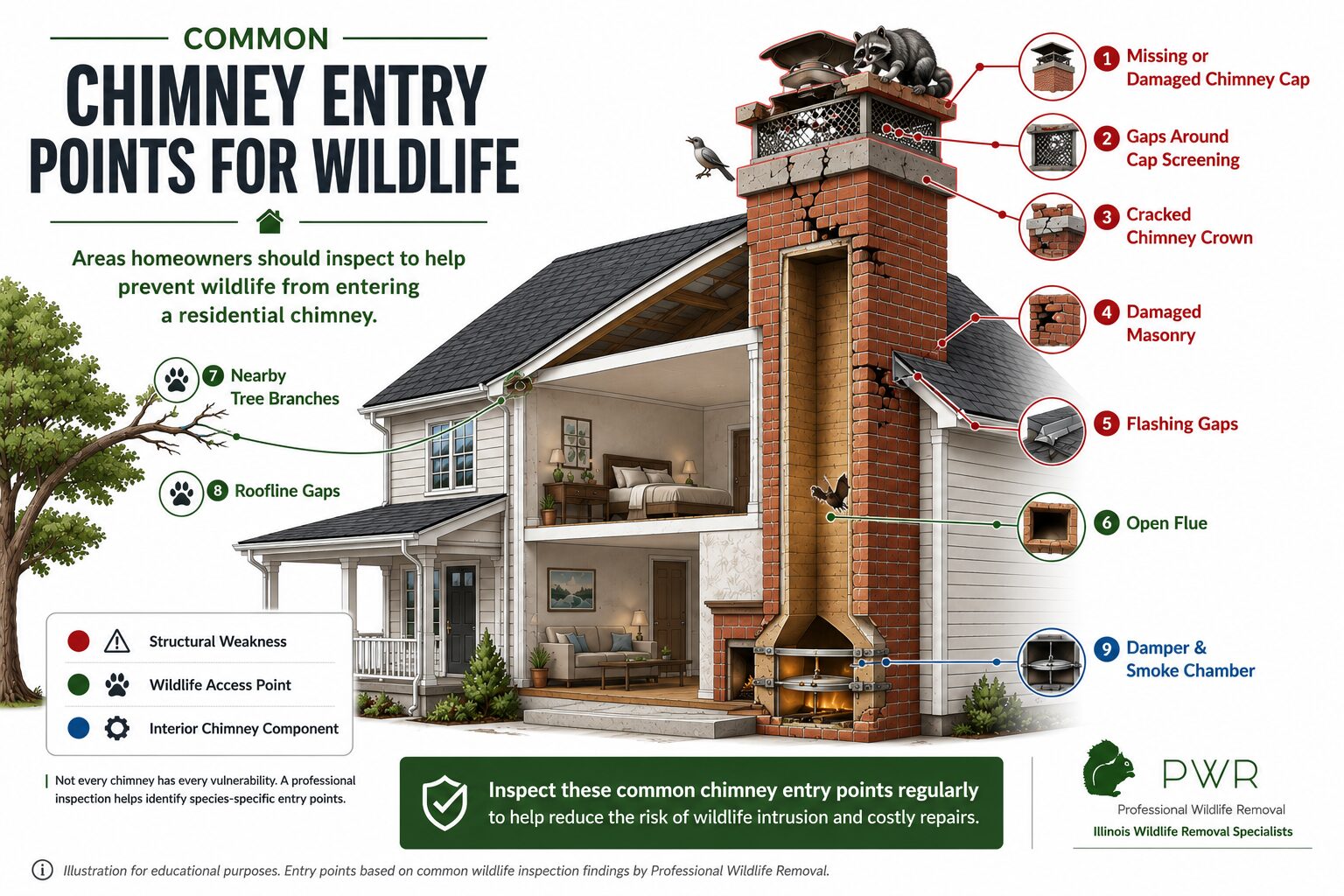
Several conditions make chimneys especially attractive:
- Missing chimney caps
- Open flue systems
- Damaged masonry
- Tree branches near the roof
- Existing nesting materials
Wildlife problems inside chimneys often follow the same seasonal patterns seen in attics. Homeowners can learn more about these behaviors in keeping raccoons out of your attic.
Similar nesting behavior occurs with squirrels during warmer months. Information discussed in spring squirrel nesting prevention explains why sheltered spaces become attractive during this season.
Bat activity follows a different seasonal pattern because maternity colonies develop during specific periods. Guidance provided in bat exclusion timing explains why timing becomes important when bats are involved.
Summer heat creates another concern that many homeowners overlook. Animals trapped inside a chimney can quickly experience distress because temperatures rise rapidly inside enclosed spaces.
The Illinois Department of Natural Resources’ bat species guide explains how bats use natural and man-made structures for shelter and roosting, which can include residential chimneys under the right conditions. Small openings may appear harmless from the ground, but wildlife often sees those same openings as safe entrances that provide shelter for an entire season.
Real Risks: What Happens When You Delay Removal
Wildlife problems inside a chimney rarely disappear without intervention. Animals that find shelter often remain in place, especially when young animals are involved. What begins as an occasional noise can eventually affect the chimney, fireplace, and surrounding areas of the home.
When you are hearing noises in your chimney, a few quiet days do not always mean the animal has left. In many real cases, wildlife is simply less active during certain times of the day. Delaying removal often allows nesting materials, contamination, and structural issues to become more severe.
The table below highlights some of the most common problems associated with delayed removal.
These problems rarely stay isolated. One issue often leads to another, which is why prompt action usually reduces cleanup costs and repair expenses.
Dehydration, Odors, and Insect Activity
Animals trapped inside a chimney can face extreme conditions during summer. Limited access to water, food, and cooler temperatures creates significant stress within a short period.
A trapped animal may eventually die inside the chimney, creating strong odors that spread throughout the home. Those odors often attract flies and other insects, which can lead to maggots and additional sanitation concerns.
Based on actual scenarios, homeowners frequently notice the smell before they realize what has happened. By that point, the cleanup process is often more complicated than it would have been during the earlier stages of the problem.
Strong odors rarely remain inside the fireplace area. Air circulation throughout the home can carry unpleasant smells into nearby rooms, making the situation increasingly difficult to ignore.
Chimney Damage From Nesting Activity
Wildlife rarely enters a chimney without leaving signs behind. Nesting materials such as sticks, leaves, insulation, and debris often accumulate over time.
Raccoons can create significant disruption while building or expanding a den. Birds may introduce enough material to affect airflow, while repeated movement can contribute to wear inside the chimney system.
Small problems often remain hidden until an inspection reveals damage that has been developing for weeks or months.
Nesting materials can trap moisture against chimney liners and create long-term deterioration. What starts as a small nest can eventually contribute to costly liner repairs if wildlife remains inside for an extended period.
Chimney liners are especially vulnerable when debris, moisture, and repeated animal activity remain unchecked. Early removal often prevents minor issues from developing into larger repair projects.
Guano Build-Up and Health Concerns
Bat activity introduces another concern that many homeowners do not expect. Guano can accumulate gradually when bats continue using the same location over time.
Waste buildup creates more than a cleaning issue. Odors, staining, and sanitation concerns often increase as accumulation continues. The Centers for Disease Control and Prevention provides guidance on histoplasmosis, a fungal disease associated with environments where bird or bat droppings have accumulated.
What we often see is homeowners focusing on the sounds while remaining unaware of the conditions developing inside the chimney. Identifying and resolving the source early often prevents larger cleanup projects later.
The risks associated with chimney wildlife extend beyond noise alone. Understanding those risks helps explain why safe removal and prevention should be addressed before conditions become more serious.
PWR’s Safe & Legal Chimney Extraction Process
Every chimney wildlife situation requires a plan that matches the species, season, and condition of the property. A method that works for one animal may not be appropriate for another.
Led by Zach Posey, our team focuses on identifying the animal first and selecting the safest and most effective solution.
This approach reflects our wildlife removal services, helping protect homeowners while ensuring wildlife is handled properly.
Prevention and Long-Term Protection
Removal addresses the immediate problem, but prevention helps reduce the likelihood of future intrusions. Long-term protection focuses on eliminating the conditions that allowed animals to enter.
Chimney caps provide one of the most effective barriers against future animal entry. Sealing access points and correcting structural vulnerabilities can further reduce the chances of wildlife returning.
We also install protective chimney caps and back qualifying prevention work with warranty protection for added peace of mind. This additional layer of protection helps homeowners feel confident that the problem has been addressed beyond the initial removal.
Many homeowners searching for a raccoon removal service initially focus only on the sounds they hear. Long-term protection often becomes the most valuable part of the entire process because it helps prevent future damage.
Based on actual scenarios, prevention work frequently saves homeowners more money than repeated wildlife removals. Correcting access points today often prevents another intrusion throughout our Illinois service areas.